Cottonwood Bud Tallow Balm
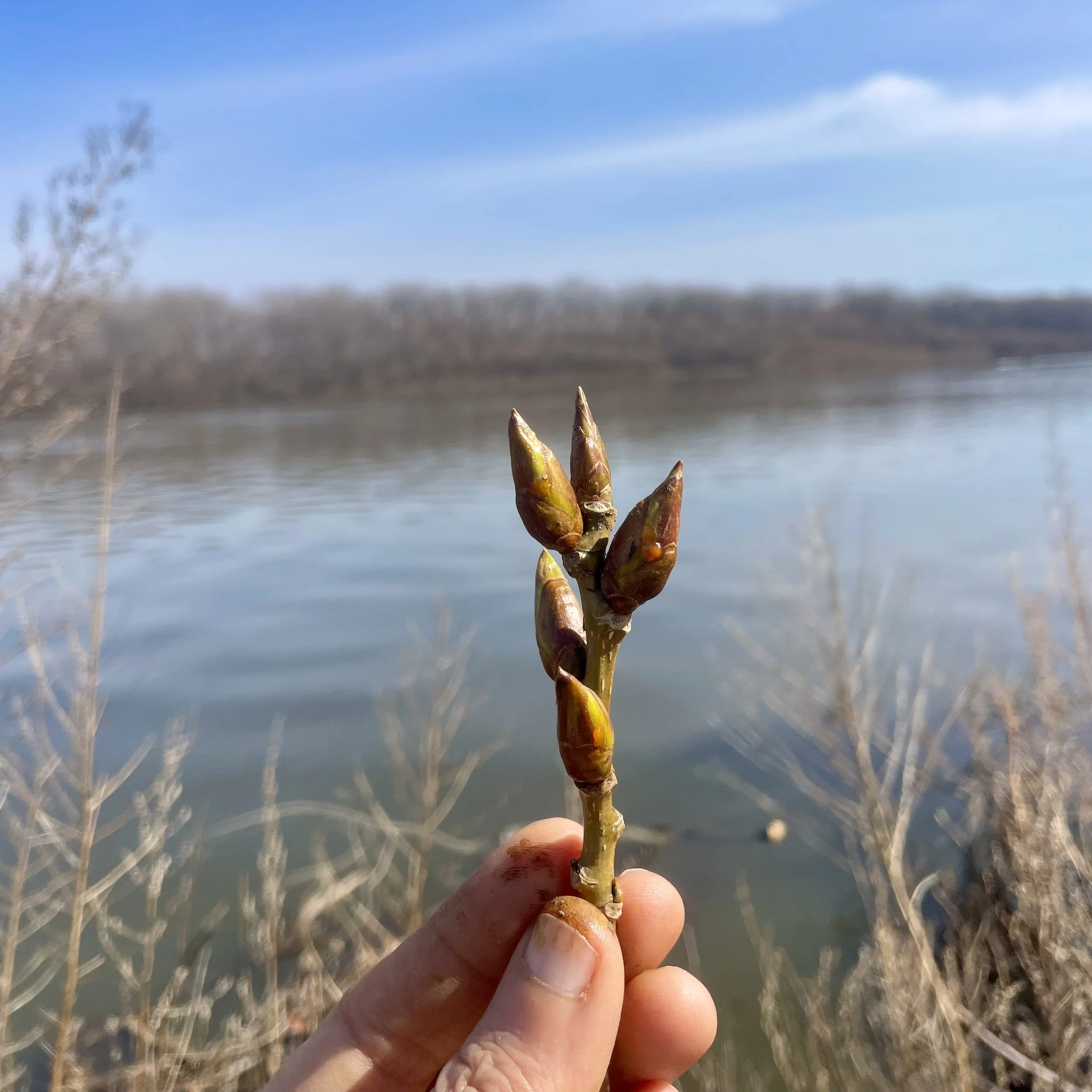
Cottonwood Bud (Populus deltoides). Note the drops of red resin some of the buds are exuding.
The resinous Cottonwood and Poplar Buds (Populus spp) have been used for medicine across cultures worldwide since ancient times, earning them the common name Balm of Gilead. As early as the 1100's AD Unguentum Populeon was mentioned in the incredible herbal text, The Trotula, as a lard-based salve that heavily featured buds of Populus species trees, most likely Black Poplar (Populus nigra), which is native to Eurasia. It was often prescribed for pain and fevers, which tracks, since the buds contain the analgesic anti-inflammatory constituent salicin. The recipe also calls for some witchy Nightshade Family plants including Mandrake, Henbane and Black Nightshade, the inclusion of which has caused some scholars and herbalists to theorize that this may have been a version of a witch's “flying ointment,” which was applied topically for its mind-altering and divinatory effects.
We made a Cottonwood Bud Tallow Balm this past weekend in our Spring Equinox Tree Medicine Intensive and, while it most certainly doesn't have hallucinogenic effects- because no we did not add Mandrake and friends lol- it does offer gentle pain-relieving, antiseptic and vulnerary benefits and smells just wonderful. I adore it as a face lotion and the aroma is so earthy and ancestral. If you've ever smelled propolis the smell is similar, as this is one of the tree resins the bees harvest to make their propolis!
The buds are best harvested in winter and very early spring, before they begin to leaf out. Look for dropped branches and buds from winter storms beneath trees and give them a crush to be sure they're aromatic and haven't matured past the resinous stage. In our bioregional I harvest drops from Cottonwood (Populous deltoides) along the Connecticut River and a bit farther north you'll find Balsam Poplar (Populus balsamifera) which is even more resinous!
The Medicine of Cottonwood Bud
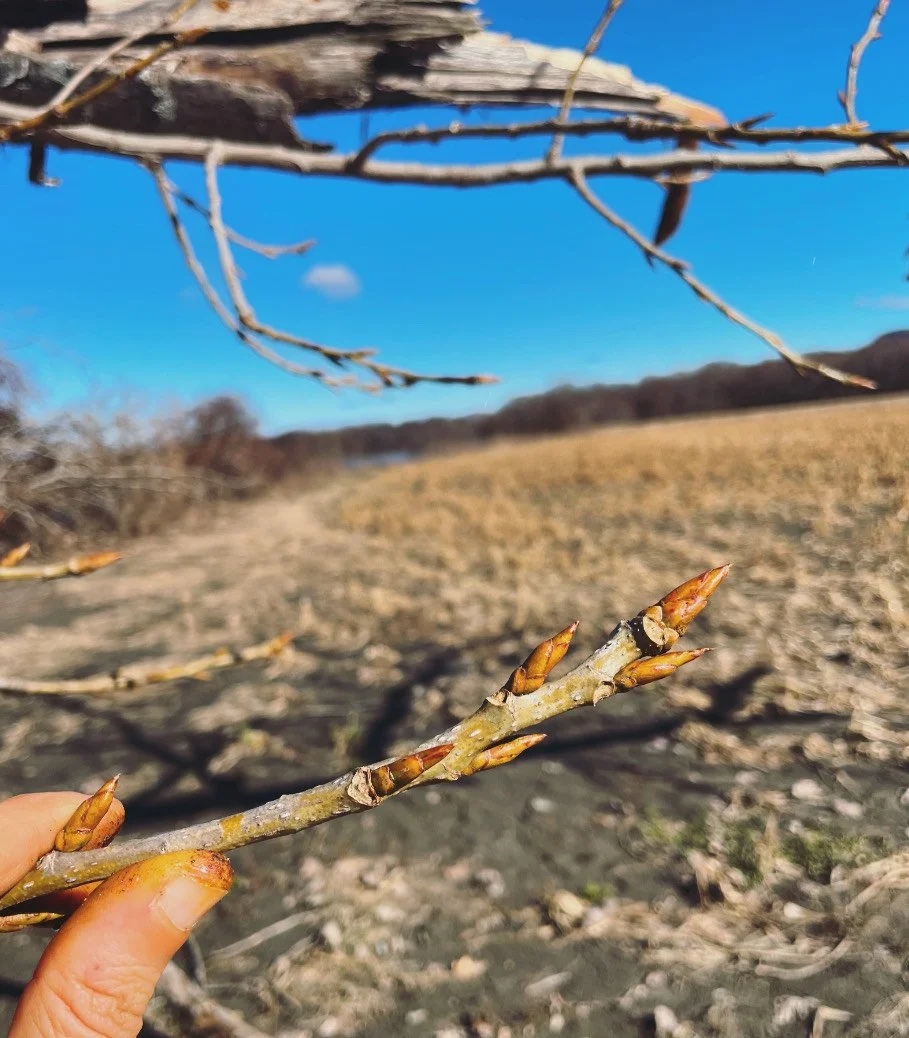
Latin Name: Eastern Cottonwood (Populus deltoides); Balsam Poplar (Populus balsamifera)
Common Name: Balm of Gilead, Cottonwood, Necklace Tree
Part used: leaf + flower buds
Herbal energetics: Cool, Dry
Taste: Bitter, Acrid, Aromatic
Harvest: mid-late winter into very early spring; collect from fallen branches from winter storms
Herbal actions: anti-inflammatory, antiseptic, analgesic, expectorant, vulnerary
Preparations: tincture (75%A), infused oil, salve, tallow balm
Dosage: tincture 15-30 drops, as-needed; topically, as-needed
Medicinal Use:
The buds contain the pain-relieving glycosides salicin and populin. Used topically, long known as “the Balm of Gilead” in old herbals for pain, strains, injuries, rashes, bruises, burns, arthritic and rheumatic pains, minor skin irritations and so on. Also very helpful for eczema, psoriasis, and dry flaky skin. Most commonly used topically as an oil or salve. My favorite preparation is tallow balm. The buds also have a history of use taken internally (generally as a tincture as they are barely water-soluble) as an expectorant for thick, stuck phlegm in cases of bronchitis and are considered a specific for laryngitis. May mix with raw honey to make it more palatable
From The Physiomedical Dispensary (Cook, 1869):
“The buds are of the terebinthinate balsamic character, stimulating to the mucous membranes and kidneys, slightly influencing the circulation, and acting chiefly on the respiratory passages. They promote expectoration actively, and give a tingling sensation in the bronchi and through the lungs; whence they should never be employed in recent or irritable coughs, or in any in flamed condition of the organs of respiration; but make an excellent stimulating addition to more relaxing expectorants and tonics for old coughs, and dry asthma, with pulmonic debility. For their action on the kidneys, some have spoken highly of them, but they are suited only to cases of much torpor, and then should be combined with relaxant diuretics. In purely chronic forms of rheumatism, they form a fair stimulating addition to such articles as cimicifuga and phytolacca. Heated in lard or other fat, they form a stimulating ointment, which is of good service in congested wounds and bruises, indolent sores, and rupia; and Rafinesque commends it as a local application in chronic rheumatism.”
Making Cottonwood Bud/Balm of Gilead Tallow Balm
Ingredients:
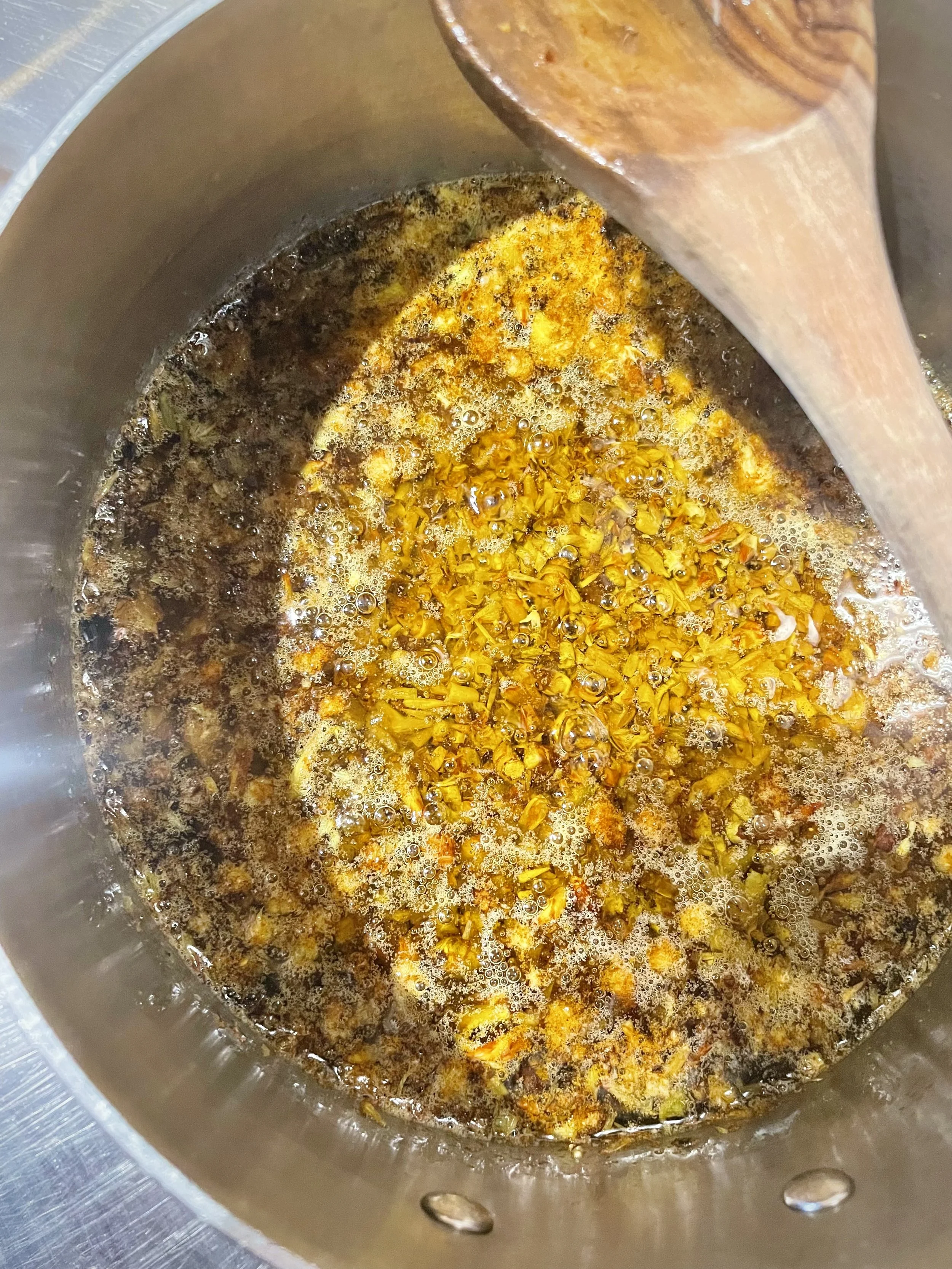
Chopped buds infusing in tallow
1.5 cups cottonwood buds (Populus deltoides or P. balsamifera or any aromatic Populus spp bud), fresh or dried
2 cups tallow, ideally grass-fed
¼ c olive oil
Directions:
Chop the Cottonwood buds into small pieces or snip with clippers. Your tools will get resinous but try and scrape as much off as possible to add to the tallow
Melt the tallow in a pan and add the olive oil to the pan too. You can learn how to render tallow and the benefits of tallow HERE or it may be purchased already made at many natural food stores
Add the cottonwood buds and warm on low- warm enough for the buds to infuse but not burn off too many of the essential oils. The tallow should be just barely bubbling, if at all. Infuse in the tallow for at least 1 hour and ideally up to 4 or even 6 hrs. You’ll know it’s ready when the tallow has taken on the aroma of the buds.
Strain using a mesh strainer and pour into jars
Use:
Use topically as needed for pain, cuts and scrapes and for overall skin health. This has a very long shelf-life and lasts unrefrigerated for 1 year minimum
References & Further Resources
Medicinal Plants of the Mountain West, by Micheal Moore
The Physiomedical Dispensary, by William Cook (1860)