Medicinal Mushrooms in the Kitchen
I’m so happy to share with you all a replay of my “Medicinal Mushrooms in the Kitchen” workshop, which was hosted by the wonderful River Valley Co-op.
In this class:
I share about medicinal mushrooms and their myriad properties
Spotlight 3 of my favorite culinary medicinal mushrooms- Lion’s Mane, Shiitake & Maitake
Demo making Fungi sott’olio (Italian Pickled Mushrooms).
And you can also learn more about these mushrooms and ways to incorporate them into your cooking in the post below!
Some Favorite Medicinal Mushrooms and Ways to Work with them in the Kitchen:
Lion’s Mane, Maitake & Shiitake
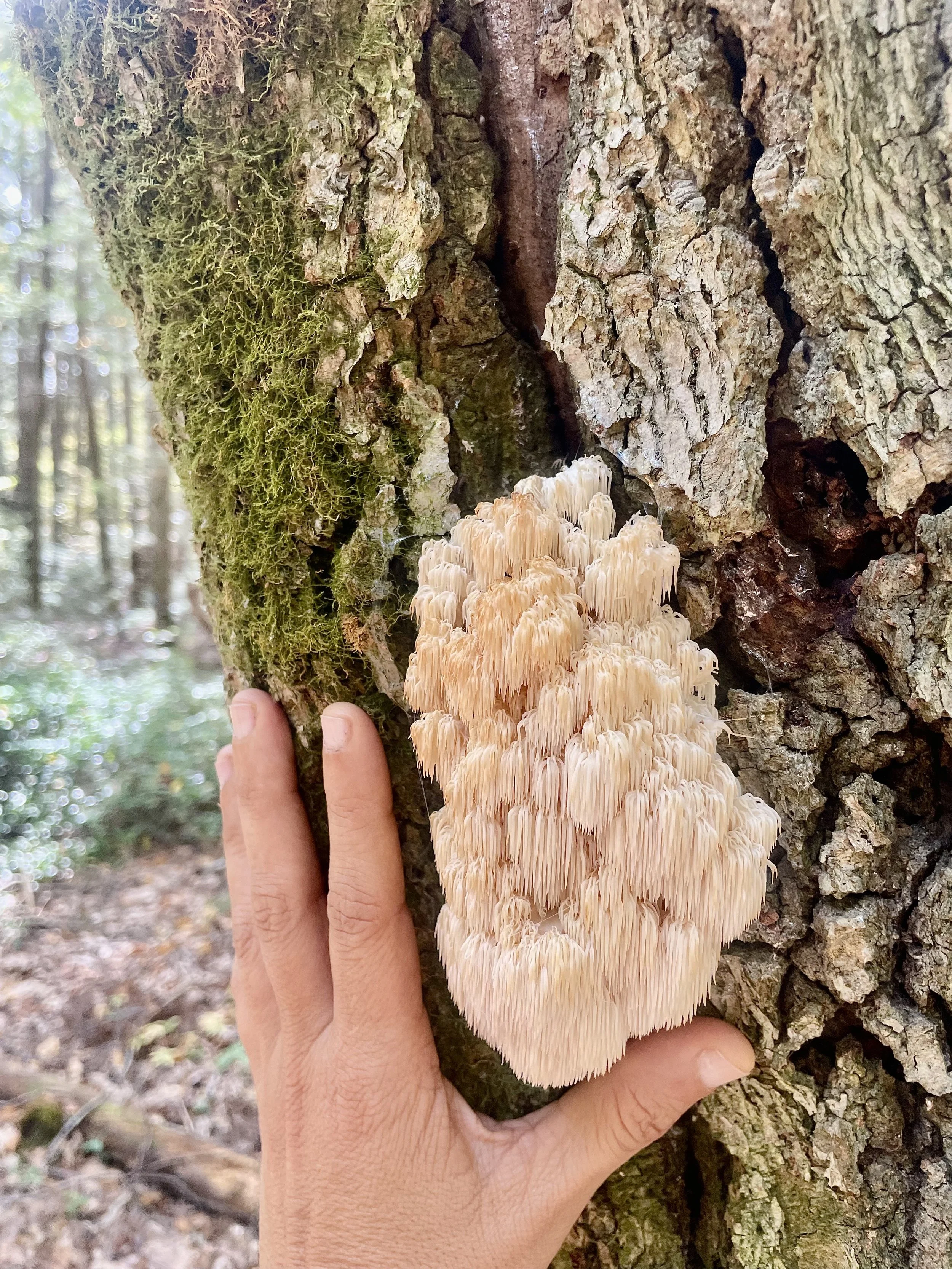
Luminous Lion’s Mane
Lion’s Mane/Hou tou gu/Yamabushitake
(Hericium erinaceus, H. erinsceum, Hydnum erinaceum)
Energetics: sweet, neutral to moist
Habitat + range: found throughout the entire temperate band of the globe. Grows on dead and dying conifers and hardwoods
Herbal actions: anti-convulsant, anti-fungal, immunomodulator, immune stimulant, neuroprotective, nerve tonic, nootropic, styptic
Specific indications: specific for nervous system/cognitive issues but also benefits the immune and digestive systems. Brain tonic- nootropic (enhances cognitive function), foggy thinking, dementia, poor cognitive function- Paul Stametes calls it “brain food that increases intellect and nourishes the nervous system.” A study in Japan of patients in a rehabilitation center gave participants (elderly folks with cerebrovascular disease, degenerative orthopedic disease, parkinsons, spino-cerebellar degeneration, diabetic neuropathy, spinal cord injury, or disuse syndrome) 5 grams of Lion’s Mane mushroom in their soup daily for 6 months- after 6 month 6 out of 7 participants showed improvement in perceptual capacities and all 7 had improvement in their Functional Independence measure. Another human study on 29 men and woman ages 50-80 with mild cognitive problems were given 1 gram of dried fruiting body 3x/day and they showed significant improvement at 8, 12, and 16 weeks but the effects didn’t last beyond 4 weeks after being discontinued. There is in vitro evidence that shows it has a myelin-generating effect on nerve and cerebellar glia cells (the myelin sheath is a sleeve of fatty tissue that protects your nerve cells and allows electrical impulses to transmit quickly and efficiently along the nerve cells). Low immunity, cancer. Active constituent erinacine. Traditionally used in Chinese medicine for digestion, gastric ulcers, and general debility. Powdered mushroom stops bleeding when used topically
Dosage + preparation: double extract- 2-4ml/day. decoction- 2 cups/day. dried powder (cooked into soups, broths)- 5 grams/day. In food
In the kitchen: delicious, buttery flavor with a consistency often compared to seafood so often used in recipes instead of shellfish, but it is so versatile and shouldn’t be limited only to this! Wonderful on its own and adds a rich flavor to sauces (see recipe: Lion’s Mane Tomato Sauce)
NOTE: Coral Tooth/Coral Hedgehog/Bear’s Head Tooth Mushroom (known as H. coralloides, H. ramosum, H. americanum, there is lots of genetic taxonomic confusion among the different species and many mycologists consider them interchangeable) are closely related to Lion’s Mane and also contain erinacine, and likely have similar medicinal use
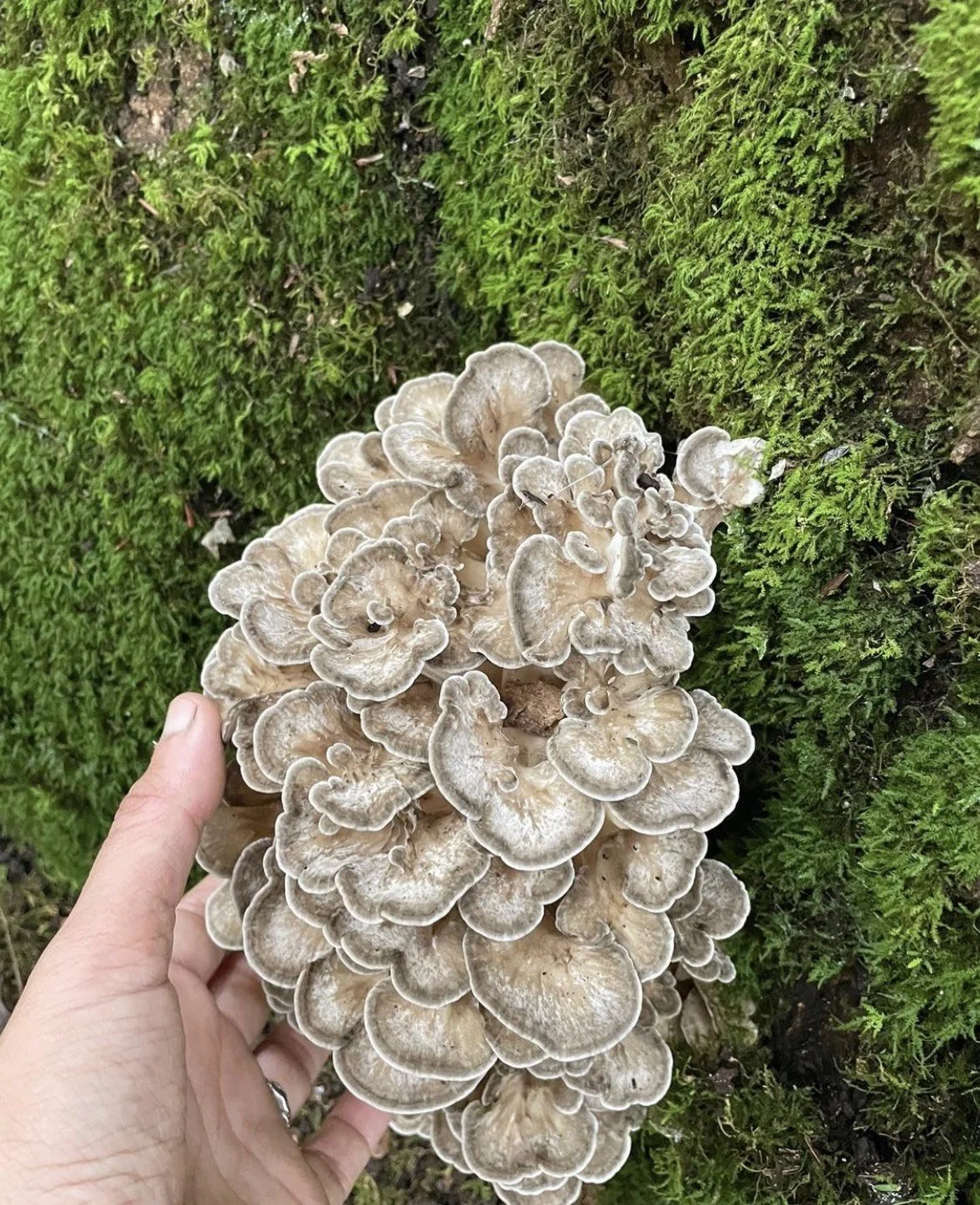
Maitake/Hen of the Woods/Hui shu hua/Signorina
(Grifola frondosa)
Energetics: sweet, neutral in terms of dry to moist
Range + habitat: found throughout temperate region of the globe growing at the base of old hardwoods (especially oak trees and stumps)- eastern U.S., Europe, Asia
Herbal actions: antibacterial, anti-cancer, anti-diabetic, anti-tumor, digestive tonic, diuretic, hepatoprotective, hypotensive, immunomodulator, immune stimulant
Specific indications: cancer (enhances activity of macrophages, N-Killer cells, cytotoxic T-cells and inhibits tumor growth- especially lung, stomach, breast, colorectal, prostate, liver cancer, and leukemia), low immunity, colds and flus, autoimmunity, high blood pressure, high resting glucose levels and pre-diabetes. Was worth its weight in silver traditionally in Japan. In Chinese medicine is a Spleen Qi tonic (supports digestion) and drains dampness, calms the mind, arthritis
Dosage + preparation: double extract- 2-4 ml/day, decoction- 2 c/day, dried powder (added to any liquid that will cook for at least 30 min)- up to 7 grams/day. In food
In the kitchen: Delicious! Prized edible everywhere it grows and harvest areas were traditionally kept secret. Contains glutamates (natural MSG) and adds umami flavor and enhances taste of dishes its added to. Tender enough to be sautéed as a side dish, with vegetables in stir fries, topping on pizza, soups, ramen, stews. Gives broth a rich, savory flavor. Has a pleasant, meaty texture. If harvested when it’s old it will be too tough to eat but will still make a fantastic broth! (See recipes: Maitake & Burdock Immune-boosting Soup, Italian Grinders with Maitake, Medicinal Mushroom Risotto)
Positive interactions: improves the effectiveness of radiation (enhances the sensitivity of cancer cells to radiation) and chemotherapy while lessening the side-effects of these treatments. In a Japanese study conducted by Dr. Nanba, of 165 patients with advanced cancer, 90% of chemotherapy patients taking a maitake extract had reduced side-effects and 85% had reduced pain levels
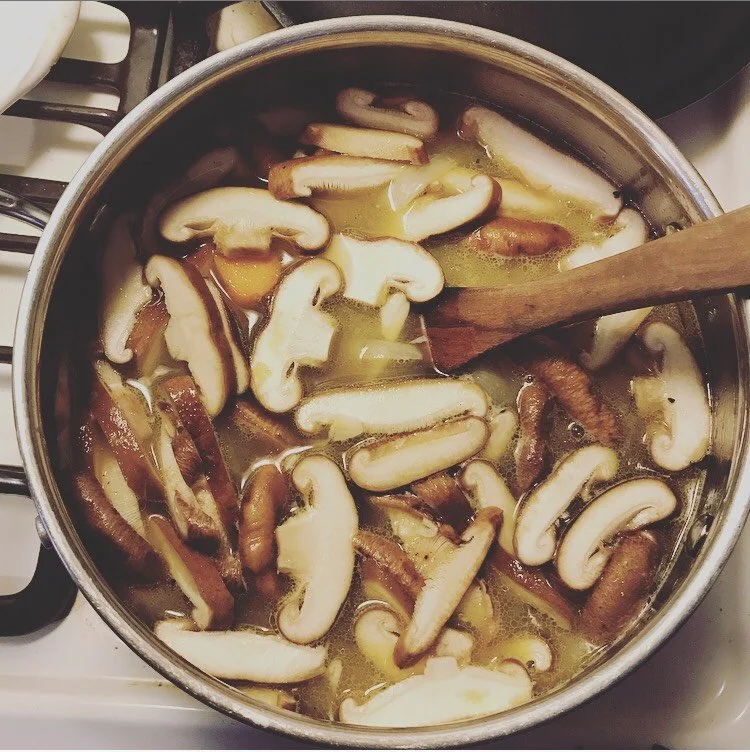
Shiitake/Xiang gu
(Lentinula edodes)
Energetics: sweet, slightly bitter, neutral in terms of dry/moist energetics
Range + habitat: Native to Japan, China, and other Asian countries. Not found in the U.S. in the wild but very easily cultivated
Herbal actions: anti-bacterial, anti-fungal, antioxidant, anti-tumor, anti-viral, hepatoprotective, immunomodulator, immune stimulant
Specific indications: cancer (in Japan a constituent from Shiitake called lentinan is widely used for breast and gastric cancer), low immunity/depressed immune function, frequent cold and flus, liver conditions (restorative and hepatoprotective- protects against acetaminophen, tetracycline, and alcohol toxicity). Has shown promise for HIV and hepatitis B). Herpes and other viruses, candida and fungal infections. Long history of use in Asia- in Chinese medicine considered to be strengthening and restorative
Dosage + preparation: Double extract- 2-4 ml/day. Decoction- 2 cups/day. In food- traditionally 6-16 grams of the dried mushroom is added to soups, meals, dishes. If you’re eating it fresh, about 90 grams is considered a serving (because of the water weight). Dried powder (added to broths, soups)- 6-16 grams/day. In food
In the kitchen: A delicious and tender mushroom that can be sautéed as a side dish, added to stir fries, or put right into soups, ramen, etc. Has a mild, buttery, and savory flavor. The stems are medicinal and, although tougher than the caps, can either be frozen for broths or simply minced and added to the dish that way
Contraindications: use with caution if on blood-thinning meds
Positive interactions: taken prior to chemotherapy helps decrease negative side-effects of the treatment, can extend the life and quality of life in terminally ill cancer patients. Helps protect the liver from medications and chemicals that can damage it
Cooking with Medicinal Mushrooms Pro-tips
Simply eating powdered, raw mushrooms with yield very little medicinal benefit!
Mushrooms must be either cooked and eaten OR- if they’re polypores such as Reishi, Turkey Tail, etc- they must boiled for at least 30 minutes (2-3 hours is actually ideal) and the resulting liquid drank in order to receive the medicinal benefits. Steaming also releases their medicinal properties
Polypore mushrooms too tough to eat that must be simmered in water to release their benefits (think broths, decoctions, chai): Reishi, Artist’s Conk, Birch Polypore, Turkey Tail
Mushrooms soft enough when cooked may be added to soups, sautéed, put into sauces, risotto, stir-fries, and cooked just like vegetables: Shiitake, Wood Ear, Oyster, Lion’s Mane, Maitake, Chicken of the Woods
When preparing soft mushrooms with stems, such as Shiitake, remove the stems and freeze for broths OR chop finely and use along with the cap
Delicious in broths and soups, like Deep Winter Miso Soup or Maitake & Burdock Immune-boosting Soup
Delicious simply sautéed with vegetables or as a side dish
Chop-up and add to sauces, meatloaf or meatballs- mince them for folks who don’t like the consistency of mushrooms of if you want to them to blend in for kids
They add the umami flavor and enhance the flavor of dishes they are a part of, especially maitake, lion’s mane, shiitake, and oyster mushrooms
Dry in a dehydrator when fresh if you have a big harvest or buy a lot from a farmer’s market when they’re in season to be added to soups, stews, stir-fries, etc
To re-constitute dried mushrooms soak in room temp water for ½-1 hr. Then add to soups, stews, sauces, and so on and cook (it’s fine to skip this step if you’re adding them to a broth)
Mushrooms dried in the sun have very high levels of vitamin d3 compared to those dried indoors. Paul Stametes noted levels of 460 iu in mushrooms dried indoors compared to 31,900 iu when dried in the sun, so dry your mushrooms outdoors if possible! (D3 is anti-cancer, it stimulates apoptosis, or programmed cell death, in cancer cells)
Freeze them fresh when you have a big harvest or buy a lot from a farmer’s market when they’re in season. Chop into the size you’d want for the dishes you like to include them in and either freeze raw or you can sauté them in garlic and olive oil/ghee/butter and freeze in freezer bags. Remove from the freezer and add to your favorite dishes or broth!
Add powders to any liquid you are cooking for at least 30 minutes (broth, soups, stocks, grains, stews)
Traditional in Italy to make pickled mushrooms- Funghi sott’olio- by boiling in vinegar then preserving in olive oil with herbs, served on antipasto plates or often put into sandwiches
The simplest way to cook them is sautéed in olive oil or butter and garlic- yum!
Favorite Recipes
Chicken Cacciatore with Maitake
Ingredients:
1 lb chicken breasts, cut into 1-2” sized pieces or 4 chicken thighs (on the bone)
2 cups sliced, fresh mushrooms (may choose from Maitake, Shiitake, Oyster, or Lion’s Mane)
2 large onions, sliced
5 cloves garlic, minced
3 peppers, cut into 1-2” pieces
One 16 oz can of crushed tomatoes or whole peeled tomatoes (break-up in the pan) or 2 cups fresh tomatoes, chopped) or one 8 oz can tomato paste
¼ c red wine
½ c fresh parsley, chopped
salt + black pepper (or crushed red pepper flakes) to taste
olive oil
Directions:
Brown the chicken in olive oil until crispy
Add the vegetables (except the tomatoes) plus the mushrooms and sauté until soft
Add the tomatoes, wine, parsley, salt and pepper and simmer at least 30 minutes
Serve over rice or pasta of choice
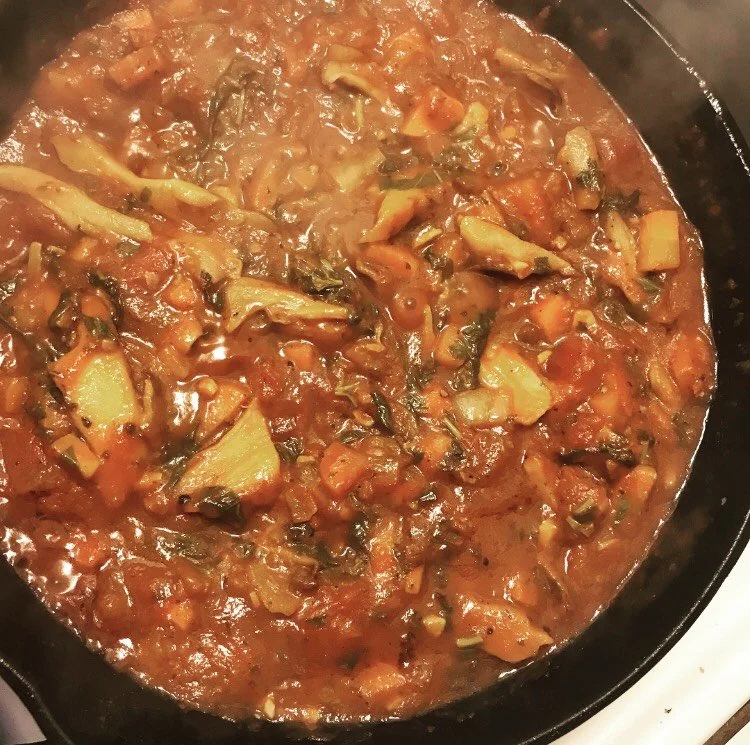
Lion’s Mane & Maitake Red Sauce
Red sauce is a great way to get medicinal mushrooms into your diet, and this recipe will also work well with Oyster, Chicken of the Woods, or Shiitake mushrooms. The mushrooms add a rich depth of flavor to tomato sauce and infuse the sauce with their medicinal properties.
Ingredients:
24 oz jar of your favorite tomato sauce (or 3 cups homemade!)
½ medium onion, chopped
4 cloves garlic, minced
2 carrots, chopped
1.5 cups fresh lion’s mane mushroom, chopped (or shiitake, maitake, chicken of the woods, or oyster mushrooms are also delicious!)
¾ cup fresh basil, chopped (or 1 tbsp dried)
dash of cinnamon powder
black pepper and sea salt to taste
NOTE: this recipe will also work with frozen mushrooms, see instructions below!
Sauté the onions and garlic in olive oil until translucent. Then add the lion’s mane and maitake and continue sautéing a few minutes until soft. Then pour in the sauce and add the carrots, cinnamon, and fresh (or dried) basil. If you are using frozen mushrooms instead of fresh add them at this point. Simmer, covered for at least 30 minutes, but the longer the better. Enjoy!
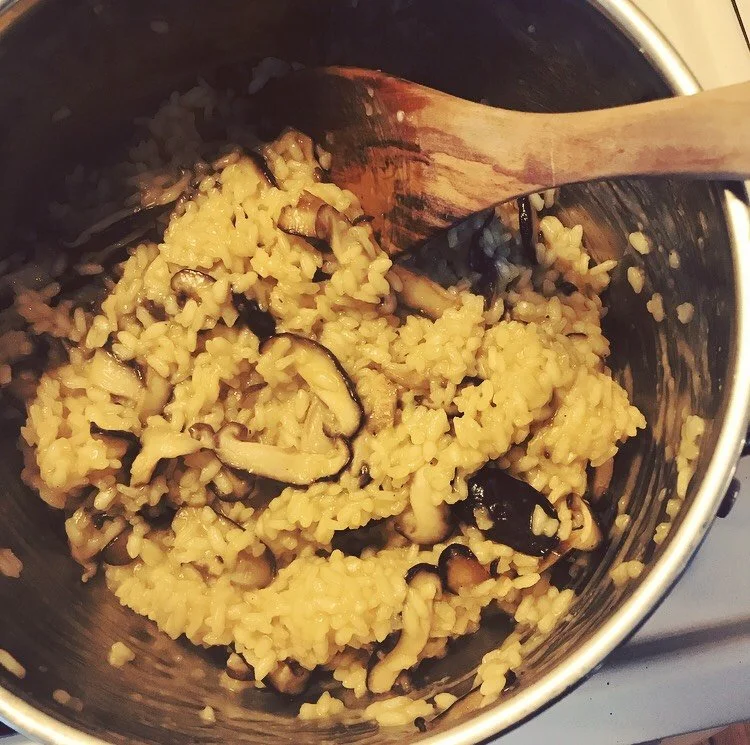
Shiitake Mushroom Risotto
Ingredients:
olive oil 0r butter
sea salt
black pepper
1.5 cups arborio rice
3 cloves garlic, smashed
3 cups broth (chicken/bone broth/bone broth plus)
parmesan cheese (optional)
3 cups fresh Shiitake, stems removed and sliced
Directions:
1.Clean the Shiitake if needed by soaking in a bowl of water to remove any residual dirt, then remove and pat dry. Slice and reserve any stems to be frozen for broth.
2.Heat olive oil in a pan and sauté the garlic cloves until golden, then remove and set aside.
3. Sauté the mushrooms over high heat until soft (takes just a few minutes) then remove, season with salt and pepper and set aside in a bowl with their juice.
4. Melt some butter (or olive oil) to a pan and once it’s melted add the rice and stir continuously so it’s coated in the oil or butter. Then add a ladleful of broth and stir the rice continuously until it absorbs all the broth you added. Then add a bit more broth and repeat, stirring continuously until it absorbs the broth. Repeat for the next 10-15 minutes, never adding more broth until what you added absorbed, until all the broth has been added to the rice. You may have to adjust the heat as you go- it shouldn’t be so hot that rice is sticking to the bottom of the pan but hot enough so that everything is bubbling in a lively way. You’ll know the risotto is done when the center of the rice is slightly firm and not bright white (taste it!). It should be chewy!
6. When the risotto is done stir in the cooked mushrooms and their broth and add some extra butter to help hold the risotto together and make it richer
7. Sprinkle with parmesan cheese and serve! Risotto is traditionally served on a plate flattened by a fork so it evenly cools. It’s traditionally eaten from the outside edge in
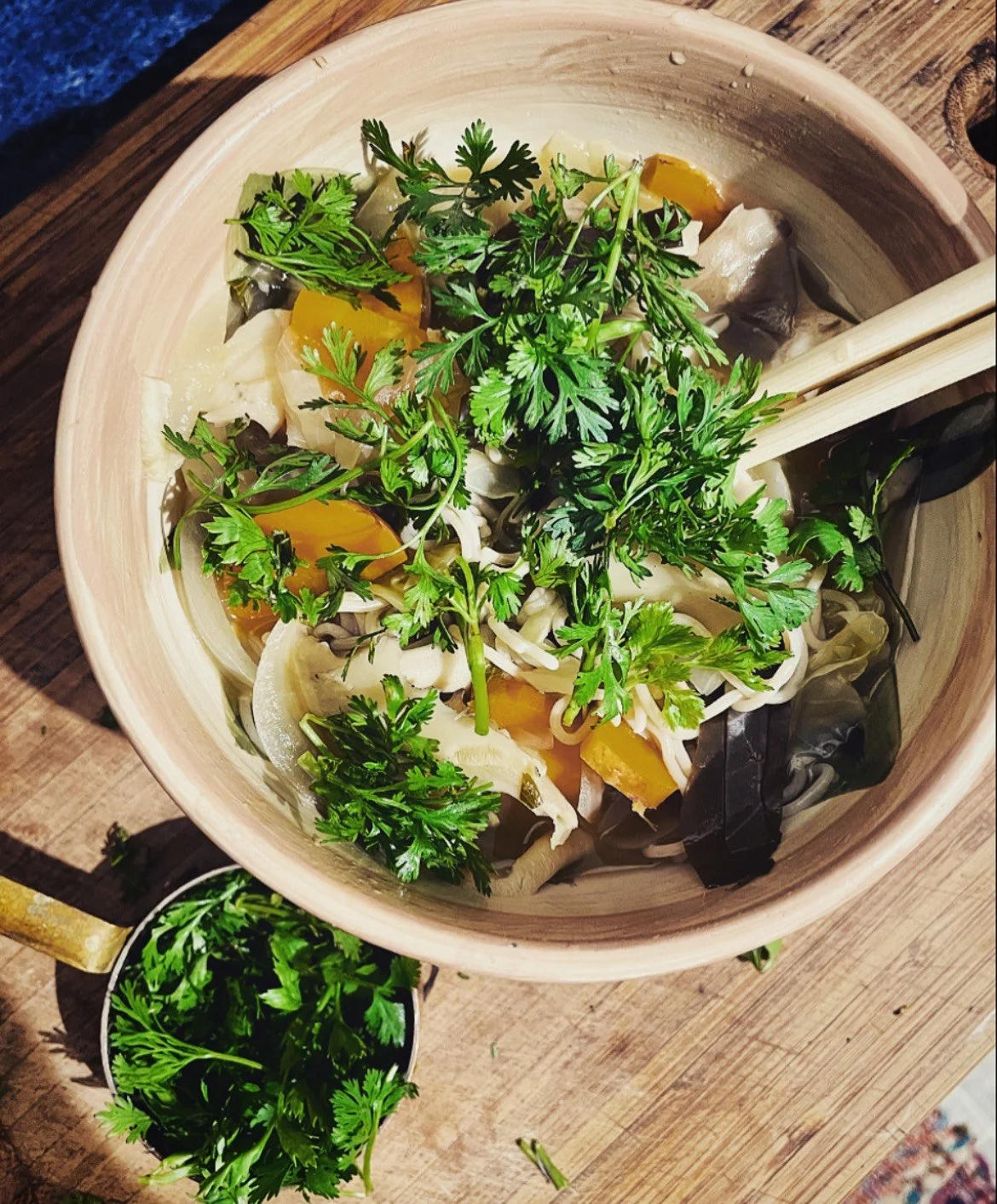
Shiitake Ramen
Ingredients:
2 cups shiitake mushroom, sliced and stems removed and reserved for broth (maitake and lion's mane are also great choices)
1 onion, chopped
4 cloves garlic, minced
2 tbsp ginger, grated or minced
½ cup carrot, cut in medallions
1 cup cabbage, chopped
6 cups water or herbal broth or herbal bone broth
4-inch strip of kombu, wakame, or kelp seaweed, cut into small pieces with scissors
Generous pinch sea salt
Cilantro, sesame oil + tamari for garnish
As a child of the 80's and 90's, the words “ramen” and “medicinal” were never two I thought I'd see together in a sentence! But oh how times (and ramen) have changed! This is truly one of the easiest recipes ever and an example of how simple kitchen medicine can be. I like to make herbal broths and bone broths on the regular and you can use one as the base of this recipe to make it even more medicinal.
Directions:
1. Put all the ingredients, except the cilantro, in the broth or water.
2. Cover and bring to a boil. Then turn down the heat and simmer for about 20 minutes, until all the ingredients are soft and cooked.
3. Add your noodles! You can choose to add your ramen noodle right to the soup while it's cooking (be sure to check the package as cooking times will vary based on the brand) or cook separate and add. I like to use the rice-based ramen noodles from Lotus brand, which are best cooked separate and then added to the finished soup
4. Finish your ramen by adding a dash of sesame oil and tamari to each bowl, as well as a generous garnish of cilantro. I try to add about ½ cup of cilantro to each bowl for a medicinal dose
Looking for online herbal learning? Or just want to say “thanks” and help support this blog? In addition to our in-person classes, we also offer online learning through our Viriditas Community on Patreon! Membership starts at just $5/month and you’ll gain access to our huge class library, seasonal teatimes, live medicine-making gatherings and more when you join!
Become a Patron!
References & Further Resources
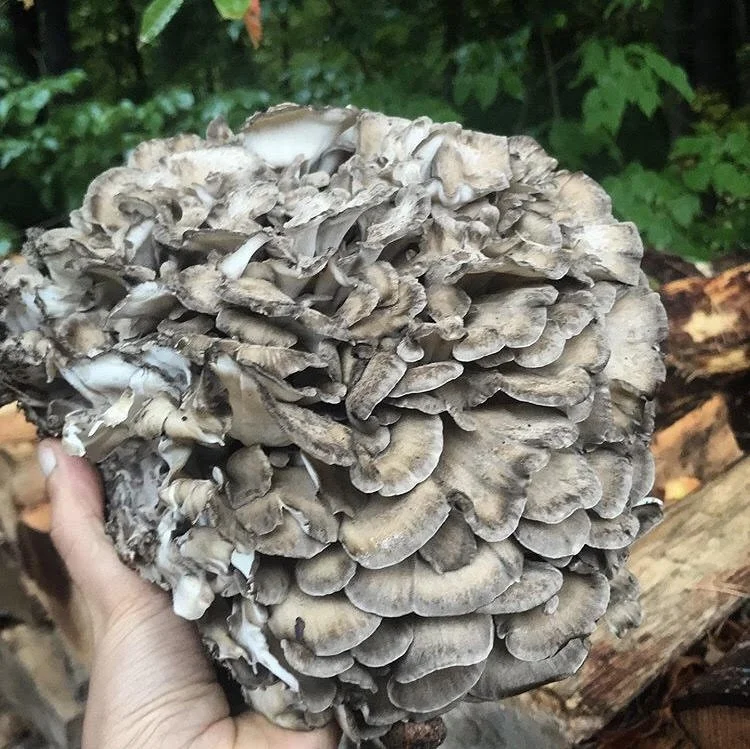
Maitake beauty
The Fungal Pharmacy
By Robert Dale Rogers
Medicinal Mushrooms: An Exploration of Tradition, Healing, & Culture
By David Hoffman
Medicinal Mushrooms: The Essential Guide
By David Hoffman
Mycelium Running: How Mushrooms Can Help Save the World
By Paul Stametes
Growing Gourmet and Medicinal Mushrooms
By Paul Stametes