Witch Hazel Medicine: Past & Present
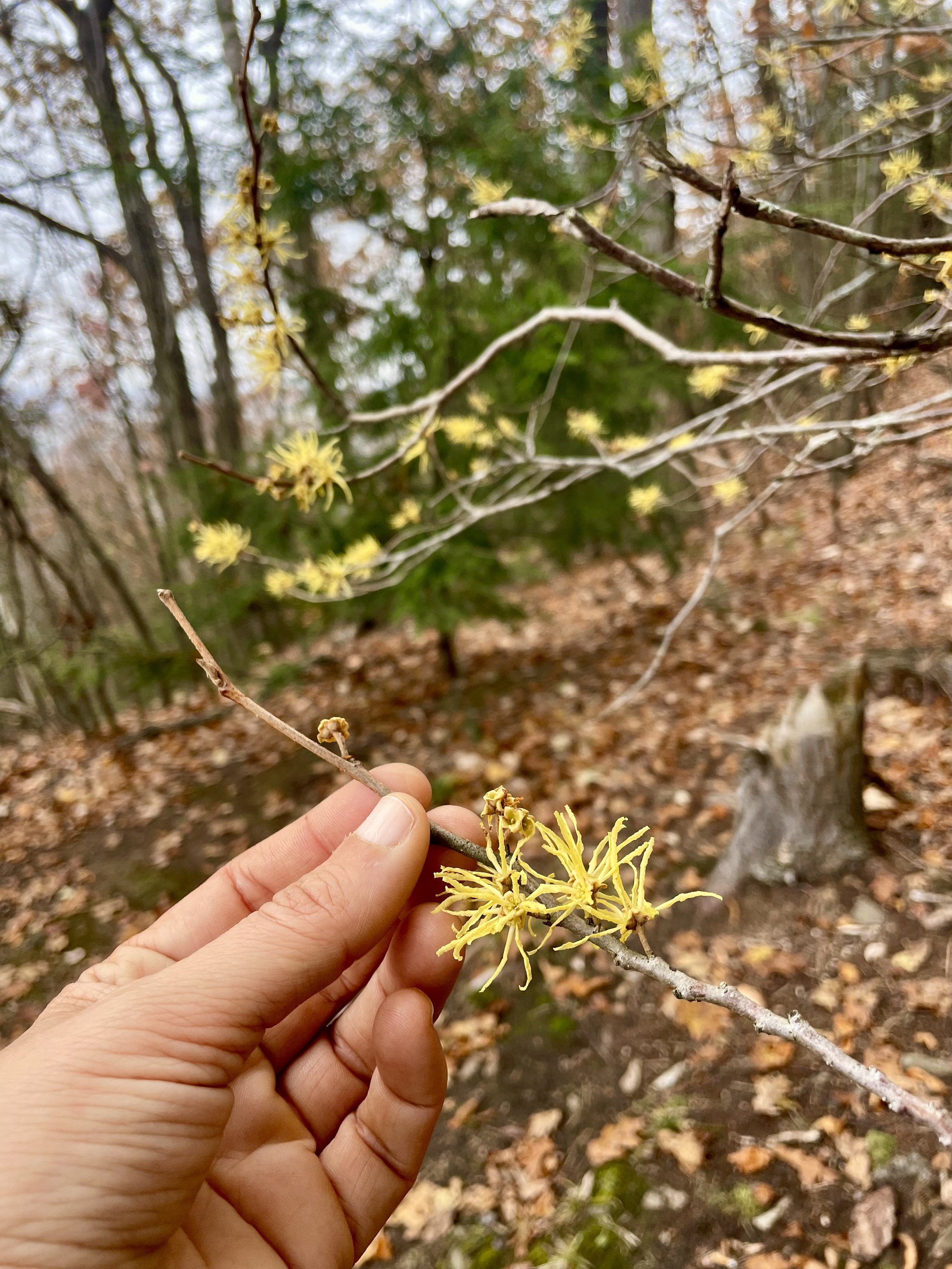
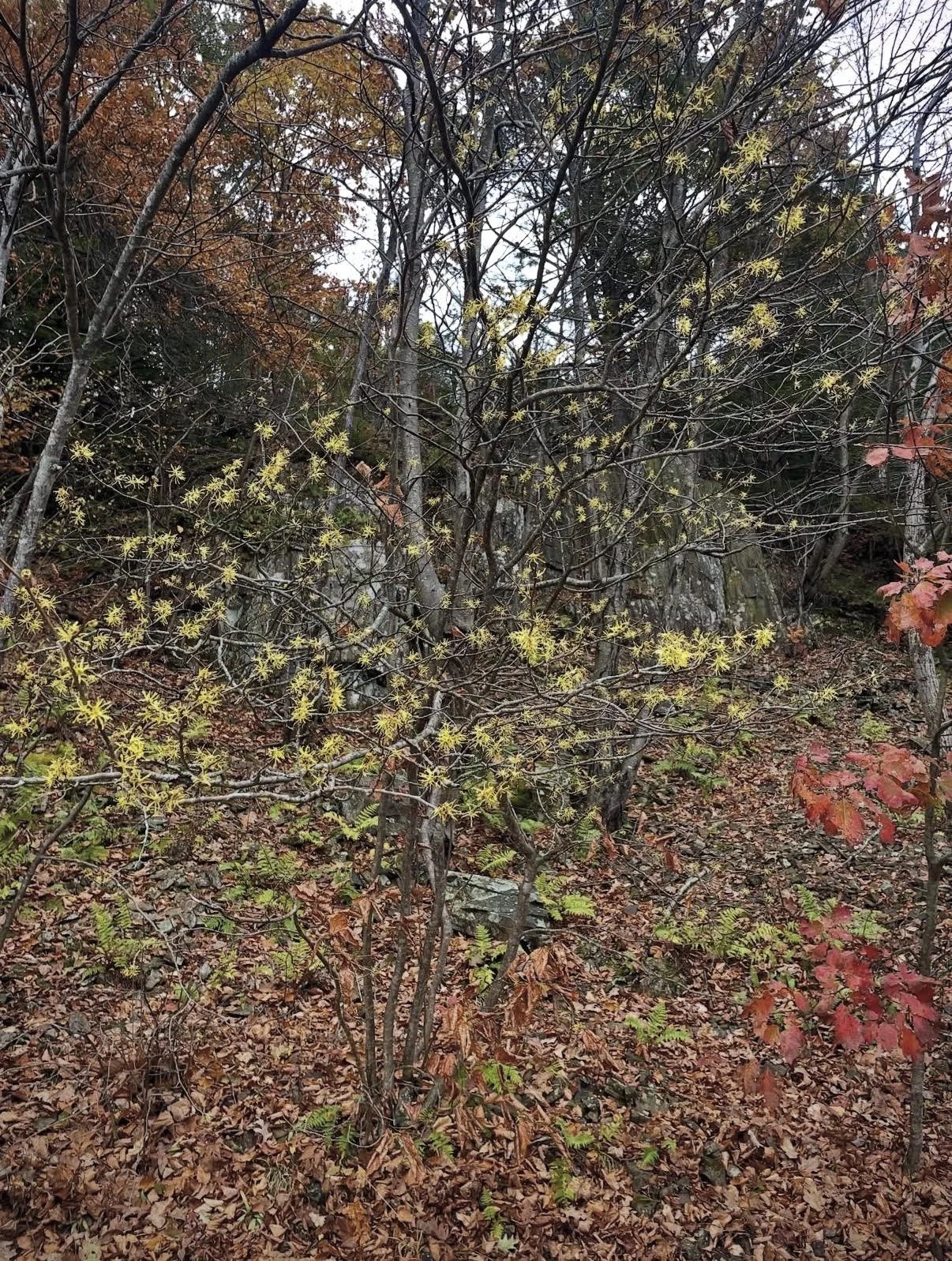
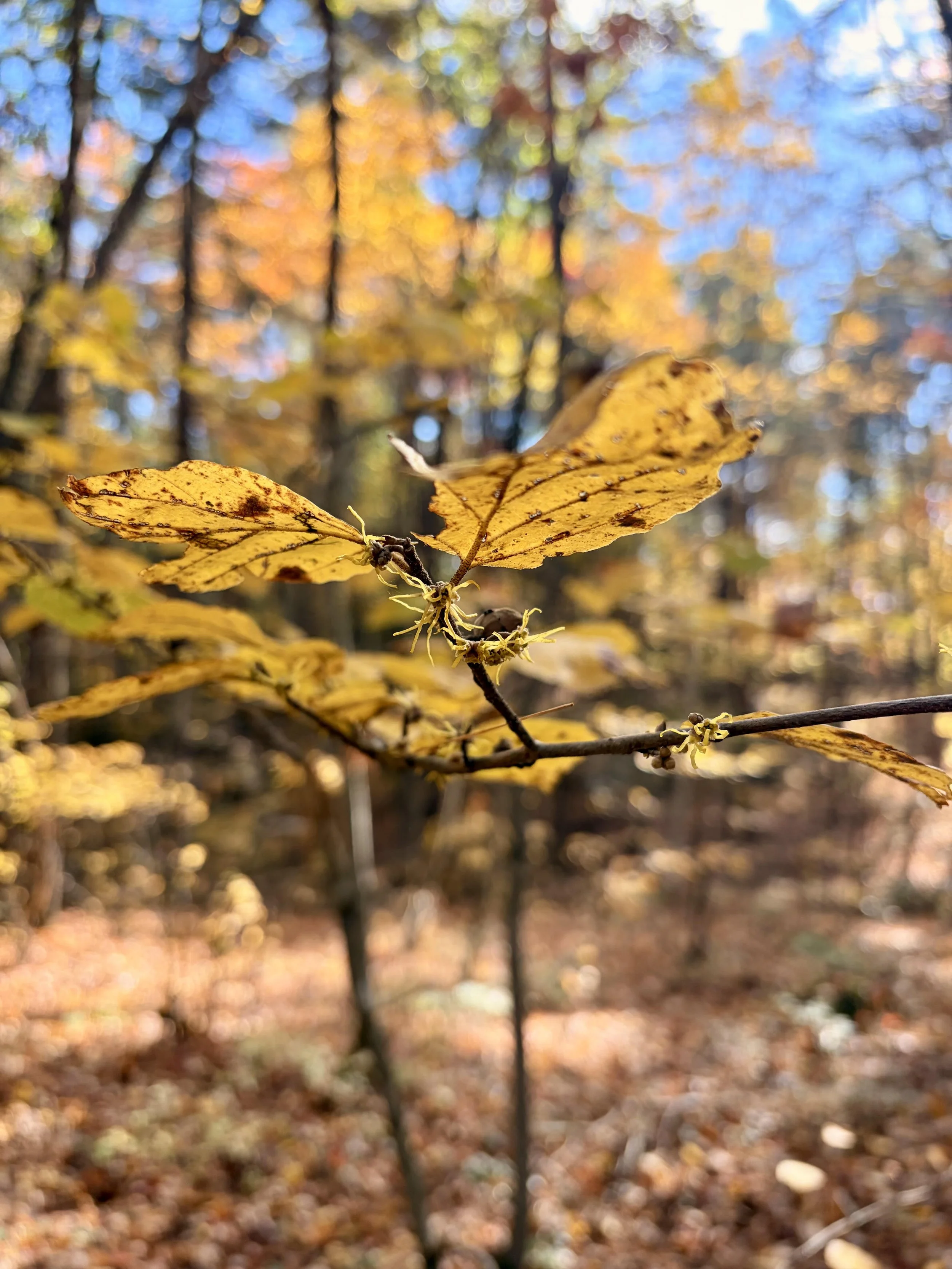
Witch Hazel (Hammamelis virginiana) is a gorgeous, native, midstory tree that lights up the fall forest with its bright yellow, spindly flowers which often persist on the trees well after the leaves have fallen. These unique flowers emit the faintest lemony-citrus scent and if you catch their bloom just right, their smell permeates the fall forest with their bright perfume.
Witch Hazel is officially listed in the US Pharmacopeia- the compendium of medicines considered "official" by the FDA- and is widely available at drug stores everywhere. It’s classified as an astringent and approved for "relief of minor skin irritations due to: insect bites, minor cuts, minor scrapes.” This is of course a vestige of a time when plants dominated the Pharmacopeia and I love that this plant is still so present in modern day healthcare. We can make our own folk preparation by using diluted tinctures, decoctions and double extracts.
Read on to learn more about this wonderful medicinal!
Witch Hazel (Hammamelis virginia)
Materia Medica
Family: Hamamelidaceae
Other Names: American Witch Hazel, Common Witch Hazel, Beadwood, Snapping Hazel, Winter Bloom
Part Used: Bark (inner cambium layer); Leaves; Flowers.
Collection: Bark- collect in spring + fall; Leaves- summer; Flowers- fall (Sept-Nov). For a primer on sustainably harvesting barks, check-out this post
Habitat & Range: Found throughout the entire northeast from Nova scotia, south to Florida and eastern Texas and west to Minnesota
Cultivation: This is a wonderful native plant to grow on the landscape for pollinators and wildlife. It’s happy in average garden soils, but thrives in rich and moist soil, and can grow in full or part shade.
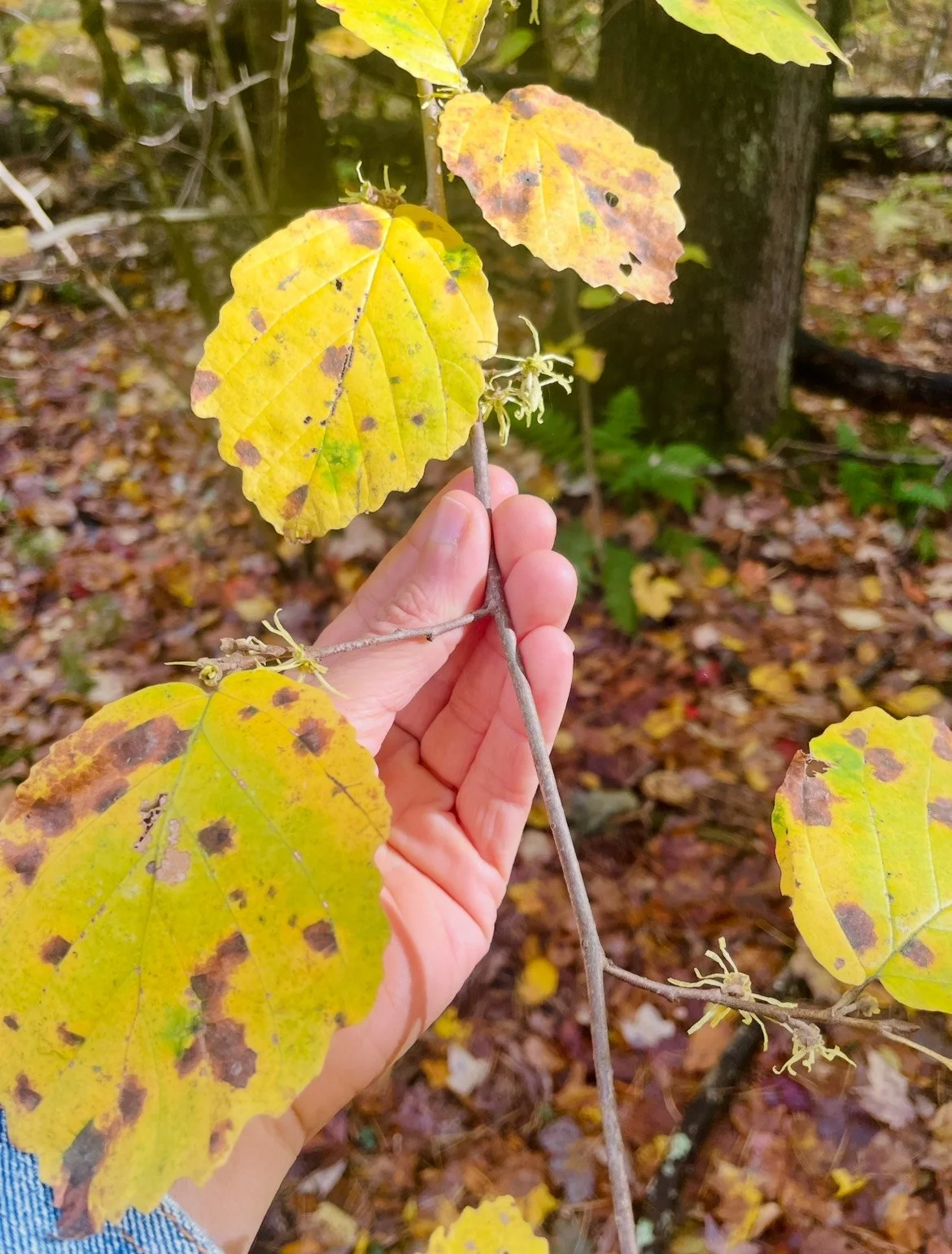
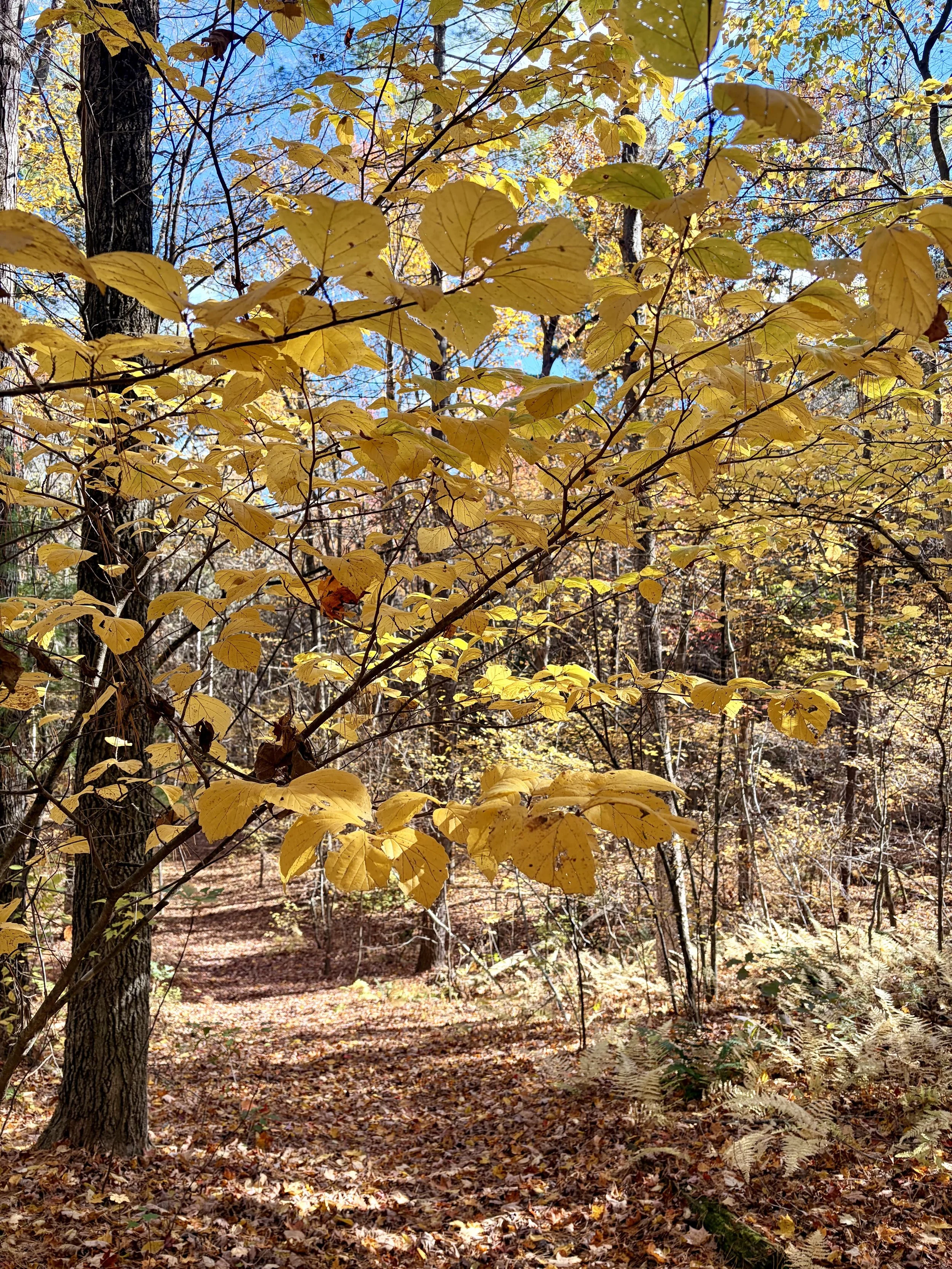
Description: Deciduous, dense, multi-stemmed, woody native North American shrub that is generally about 12-15 ft tall but can reach heights of 20 ft. Brownish-gray, smooth bark. Simple, broadly ovate, alternate leaves with wavy/scalloped edges and asymmetrical leave bases. Bright yellow flowers with a fresh, citrus-y scent emerge attached to the twigs from Sept-Nov as the leaves are changing yellow and dropping. They have 4 slender yellow petals with 4 short stamens. The fruit is a hard, woody capsule (10-14 mm long) that takes a year to mature and produces 2 black, shiny seeds, which the fruit catapults across the forest when it opens, some reports saying anywhere from 12-30 feet from the plant. It begins flowering when its 6 years old. There are two other Hamamelis species in North America but both grow south of us in Appalachia.
Herbal Ecology: Midstory plant that occupies the forest layer between the tall canopy trees and understory plants. Most often found in drier, acidic soils with Oaks and Pine, in moist soil, along streambanks, and often on slopes. Grows in full to part shade and the zig zag growth pattern of its twigs is an adaptation to maximize the its leaves absorption of the sun to photosynthesize. Important pollinator plant that supports at least 62 species of caterpillars. Until recently its pollinator was a mystery until naturalist Bernd Heinrich learned discovered it was Owlet moths (Family Noctuidaea), which are also called winter moths and are active at night. During the day they hide under the insulation of the leaf-litter for warmth. At night they have the ability to raise their body temperature by as much as 50 degrees, by shivering, which warms them up enough to go in search of nectar. This is a perfect adaptation for feeding on a flower that blooms in the fall! It’s a plant that has a high wildlife value. The seeds are eaten by wild turkeys, ruffed grouse, white tailed deer and numerous other wildlife. White tailed deer, squirrels, beavers and other wildlife eat the twigs and leaves. Wood Thrushes and Flycatchers use Witch Hazel for building nests.
Taste: Bitter, Astringent
Energetics: Cold, Dry
Constituents: Polyphenols, tannins (3-13%), flavonoids (including procyanidins, catechins, and flavanols), essential oils, saponins
Herbal Actions: Anti-inflammatory, astringent, hemostat, vulnerary
Uses:
BARK:
Excellent for skin irritations such as rashes, insect bites, poison ivy, weepy eczema, acne, and to wash wound. Often used a toner. Helpful for bruises, sprains, strains and swelling. History of use for hemorrhoids and varicosities. Use a diluted tincture in a spray for this, the decoction, or the double extract. Great addition to a sitz bath to promote healing afterbirth and is also classically put onto menstrual pads for women and birthing people to wear after birth to promote healing. Hemostat- for nose bleeds plug the nose with a cotton ball saturated in the decoction, steam distillation, or diluted tincture.
LEAVES + FLOWERS: These have the same properties as the bark but are weaker in their action and concentration of constituents. Some sources say the leaves are best collected in the fall. I like to harvest the bark in the fall and include the flowers in my medicine
Preparations & Dosage: Decoction of bark (1 tbsp dried bark or twigs OR 3 tbsp fresh: 1 cup of water three times a day.; Tincture, may be diluted with water for topical use (1:2, 75%A fresh/1:4, 50%, dried)- 5-60 drops 3x/day or in formula; Compress; DIY Toner (see recipe below); Infusion of leaves (1 tbsp dried leaves: 1 cup water, three times a day. Use topically as-needed
Contraindications: Care should be taken with internal use, as large doses can cause vomiting, nausea and constipation
More:
The forked twigs of Witch Hazel have long been a preferred wood for divining rods (also sometimes called “witching rods”) to find underwater sources and springs. This is one theory on where it got its name. Another is from the word “Wicke”- the Middle English word for “lively’ and “wych” is from the Anglo-Saxon word for “bend.” Witch Hazel may have been called Wicke Hazel by early colonists because the dowsing end of the forked branch was said to bend when underground water when detected by the dowser.
Culturally significant plant for numerous indigenous people for food, medicine and spiritual uses. Was said to have been used for bows and arrows and the seed for divination purposes. Some uses include working with a decoction of the leaves and/or bark topically for swelling and inflammation.
Colonists learned about the medicinal uses from indigenous peoples, as well as its use as a diving rod, as this is a North American herb that does not grow in Europe.
The name “hamamelis” comes from the Greek word hama for 'at the same time' and melon, which means fruit, and refers to the fact that the plant can have both flowers and fruits appear at the same time!
This is a botanical that is still in the US Pharmacopeia and is approved as an official medicine by the FDA for “minor skin irritations.” In most European Pharmacopeias as well.
The pharmaceutical is produced by steam distillation and can be made with the bark or the bark + leaves and does not contain any tannins, making a decoction a more medicinal form of witch hazel medicine, as it will contain tannins
A few traditional recipes from Bartram’s Herbal Encyclopedia:
“Injection: 1 part tincture to 10 parts boiling water, for itching piles or vaginal irritation”
“Compress: 1 oz leaves to 1 pint boiling water: soak pad of suitable material in the liquor and apply.”
“Dr A. Vogel’s Witch Hazel Salve: Witch Hazel 9; St John’s Wort oil 5; Echinacea 3; Wheat Germ oil 2”
Specific Uses (from The Eclectic Materia Medica, Felter, 1922):
“Specific Indications.—Venous debility, with relaxed and full tissues; pallid mucosa or occasionally deep red from venous engorgement, or deep blue from venous stasis; excessive mucous flow, with venous relaxation; passive hemorrhages; prehemorrhagic states, with venous fullness; varicoses; hemorrhoids with weight and fullness; rectal prolapse; dull aching pain in pelvis, genitalia, or rectum, with perineal relaxation and fullness; relaxed or engorged and painful sore throat; gastro-intestinal irritability, with venous weakness and mucous or muco-bloody passages. Locally to inflamed, ulcerated or wounded skin or mucosa, especially where venous circulation is debilitated; contusions, bruises, and muscular soreness from exertion or exposure.”
Specific (from the King’s American Dispensary, 1898, Felter & Lloyd):
“Specific Indications and Uses.—Venous debility, with relaxation and fullness; pale mucous tissues (occasionally deep-red from venous engorgement, or deep-blue from venous stasis); mucous profluvia, with venous relaxation; passive hemorrhages; varicoses; capillary stasis; hemorrhoids, with full feeling; relaxed and painful sore throat; dull, aching pain in rectum, pelvis, or female organs; perineal relaxation, with fullness; muscular relaxation; muscular soreness and aching and bruised sensation, whether from cold, exposure, bruises, strains, or from physical exertion.”
Interested in learning more about our bioregionally abundant medicinal plants? Our 9 month From the Roots Up herbal apprenticeship in bioregional herbalism is currently enrolling! With Year 1 + 2 options, this hands-on class explores the rich world of folk herbalism, botany, herbal ecology, medicine-making and explores the amazing abundant medicinals of the northeast bioregion.
2027 classes are currently enrolling
Learn More Here!
RECIPES
Witch Hazel DIY Toner
Ingredients:
1 tbsp dried OR 3 tbsp fresh Witch Hazel bark or twigs, finely chopped (you may also include flowers)
1 cup water
Alcohol (95% A)
Directions:
Combine in a pan with cold water. Bring to a boil, cover, and reduce to a simmer. Simmer on low for 15-20 minutes, adding water as it simmers if necessary. Strain. Add enough alcohol so the final proportions are 70% decoction and 30% of the alcohol, which is enough to make it shelf stable. You may also choose to use a Witch Hazel tincture (made with 95% A) for the alcohol portion.
Use: Use topically for skin irritations, rashes, varicosities, and so on. Do NOT apply to tender mucous membranes, such as hemorrhoids, as the alcohol will burn and be too abrasive to that skin. It may be diluted further with water for facial use. Easiest to apply in a spray bottle.
Here's a quick equation to get the 70/30 amounts:
To get your 70:30 ratio, divide the strained-out decoction by .70. This will give you the total number of cups for your finished double extract. Then subtract the number of cups of decoction you have from that total, which will tell you how many cups of alcohol to add.
1. Strain out your decoction. For this example, let’s say you have 5 cups of your decoction.
2. Divide that number by .70 to get your total number of cups you’ll have of your finished product
Example: 5 divided by .70= 7.14 cups finished double extract
3. Subtract the amount of decoction you have from this total amount of finished product you’ll have. This result is the amount of tincture needed to complete your double extract
Example: 7.14 cups finished double extract- 5 cups decoction= 2.14 cups alcohol needed to complete the double extract
4. Add the alcohol to the decoction to complete the double extract. Your final product will be approximately 30% alcohol, which will make it shelf-stable
Example: Combine 5 cups of the decoction + 2.14 cups tincture to yield a final amount of 7.14 cups double extract
Witch Hazel Decoction
Ingredients:
1 tbsp dried OR 3 tbsp fresh Witch Hazel bark or twigs, finely chopped (you may also include flowers)
1 cup water
Directions:
Combine in a pan with cold water. Bring to a boil, cover, and reduce to a simmer. Simmer on low for 15-20 minutes, adding water as it simmers if necessary. Sore refrigerated for up to 7 days or freeze
Witch Hazel Postpartum Pads
These help heal micro-abrasions from birth and feel AMAZING. I suggest starting these more or less immediately following birth. They help ease the stinging from urinating from microtears, help soothe inflamed vaginal and anal tissue, and are extremely soothing, pain-relieving, and anti-inflammatory. They should be prepared ahead of time and frozen.
Directions: Get “overnight” sized pads aka as big of pads as you can get. Open them up and drizzle heavily on the entire pad with the witch hazel. My favorite brand to use is Thayer’s and I especially love their Rose-infused one, but any good quality witch hazel extract will work OR you can use a decoction of the bark or twigs. Then stack the pads in a large ziplock bag, unfolded with the witch hazel applied to them, and freeze.
Use: Remove from the freezer as-needed and affix to undies. These are the most useful the first 1-3 days postpartum to help promote healing of the tissue from birth and ease stinging from urination.
NOTE: Thayer’s often sells their witch hazel labelled as a “facial toner,” and these are fine to use. The most important thing is to use an alcohol-free, distilled witch hazel or decoction and not a tincture, as the alcohol from the tincture will sting the tissue, not soothe!
Sitz Bath
A sitz bath is essential for supporting vaginal and pelvic floor health for folks who have had a vaginal birth. It helps heal micro-tears from birth, prevents infection, soothes inflamed tissue from the rigors of birth, helps heal hemorrhoids, and tones and strengthens the pelvic floor.
Ingredients:
Equal parts dried, bulk herbs:
Yarrow Lf + Fl
Calendula Fl
Plantain Lf
Witch Hazel Bark or White Oak Bark
Lavender Fl
Comfrey Lf
Rose Petals
Directions:
I suggest making 1 lb of a sitz bath for postpartum care, since you use a lot of herb to make these. To make this recipe above 1 lb, use 2.25 oz of each herb. You will need a kitchen scale for this.
Make a strong infusion by steeping 4 cups of the herbs in ½ gallon of just-boiled water. Let steep for at least 4 hrs up to overnight. Strain.
Use:
Add this infusion to a small amount of water in the bath, filling the bath up just enough to cover the pelvic region (or use a sitz bath container). It’s important that the water is warm and that the parent remains warm during the bath- ideally they are still clothed from the waist-up. Sit in the bath for at least 15 minutes 3-4x during the first week after birth. Once the water begins to cool the parent should get out of the bath.
References & Resources
Hamamelis virginiana in Skin Care: A Review of Its Pharmacological Properties and Cosmetological Applications
By Magdalena Wójciak, Wiktoria Pacuła, Ireneusz Sowa, Marcin Feldo, Filip Graczyk, Daniel Załuski
Journal Molecules. June 2025
North Carolina Extension Garden Plant Toolbox
US Forest Service Plant of the Week
Bartram’s Encyclopedia of Herbal Medicine, Thomas Bartram
The Eclectic Materia Medica. Felter, 1922
The King’s American Dispensary, Felter & Lloyd, 1898
Witch Hazel’s Medicinal Uses, Juliet Blankespoor and Megan Gemma